
Storage-First Kitchen Design for Modern Homes
Kitchen Remodeling in Allentown, PA: Storage Design
Quick Take: Storage-first kitchen design prevents clutter and wasted space before construction begins. In Allentown, most kitchen remodeling projects range from $25,000 to $70,000 and take about 4 to 8 weeks once materials arrive. Planning cabinets, pantry space, and organization around your daily routine ensures your new kitchen stays functional for years.
A kitchen can look brand new and still feel crowded if storage was not planned carefully. When small appliances take over the counters and pantry items spill into nearby cabinets. Modern kitchens need to handle more than ever, from bulk groceries to specialty cookware, which makes storage one of the most important design decisions you will make.
This article breaks down how storage-first planning works and what it means for your layout, cabinets, and budget. You will learn the most common storage mistakes, the features that add the most function, and how professional design turns everyday habits into a kitchen that stays organized long after the remodel is finished.
Why Storage-First Planning Matters in Modern Kitchens
Many kitchens look great on day one, but feel crowded within months. The issue usually is not the size of the room. It is storage that was planned around cabinet styles instead of real-life use.
Today’s kitchens need room for air fryers, stand mixers, large cookware, and pantry items bought in larger quantities. Without a storage-first plan, counters quickly become permanent storage.
A smart approach starts by mapping what you actually own and how you use it. Our team often asks homeowners to list small appliances, cooking tools, and pantry habits before finalizing a layout. That information shapes drawer depth, pantry size, and cabinet placement.
Storage-first design also improves workflow. When utensils, ingredients, and cookware are stored near where you use them, cooking becomes faster, and cleanup takes less effort. Good storage is not just about organization. It is about making the kitchen easier to live in every day.
Common Storage Mistakes We See in Allentown Homes
Even well-intended remodels can fall short when storage is treated as an afterthought. Many of the kitchens we evaluate during consultations show the same problems.
The most common issue is too many standard upper cabinets and not enough deep drawers. Shelves hide items behind other items, while drawers let you see everything at once.
Another mistake is ignoring corner space. Lazy Susans or blind corner pull-outs can add several square feet of usable storage that would otherwise be wasted.
Homeowners also underestimate pantry needs. Families in the Lehigh Valley often shop in bulk or keep extra supplies at home, especially during the winter months. A small pantry quickly overflows onto counters and tabletops.
Appliance storage is another trouble spot. Coffee makers, blenders, and toaster ovens end up permanently on the counter when no cabinet space is planned for them.
During the design phase, we catch these issues early. Identifying what could go wrong before ordering materials prevents expensive changes later and keeps your new kitchen from feeling cramped.
Cabinet Features That Maximize Every Inch
Modern kitchen storage design focuses on accessibility, not just capacity. The right cabinet features make a smaller kitchen function like a much larger one.
Here are storage upgrades that make the biggest difference:
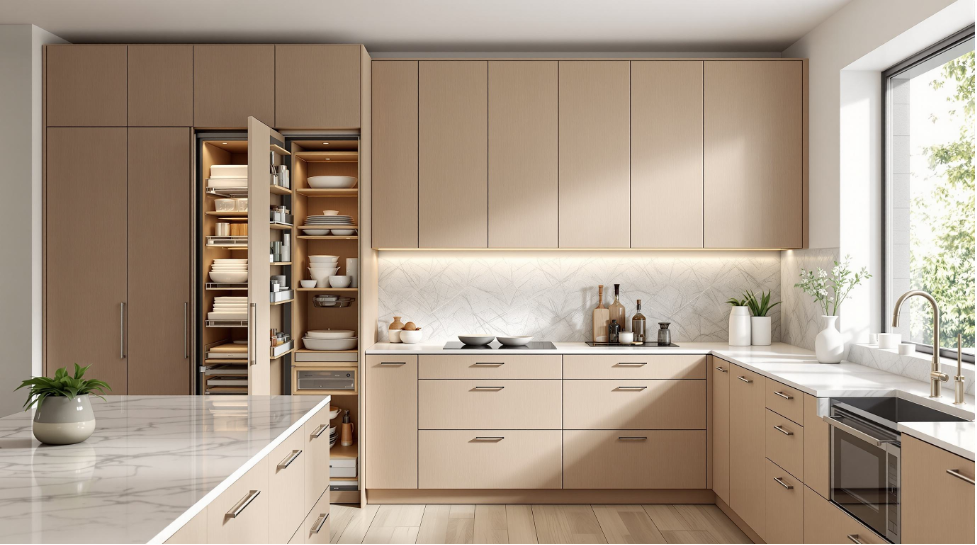
- Pull-out shelves for base cabinets. No more digging in the back for pots or small appliances.
- Deep drawer systems. Ideal for cookware, dishes, and food containers, with full visibility.
- Vertical tray and cutting board storage. Keeps large items organized and easy to grab.
- Built-in spice racks and narrow pull-outs. Perfect for small spaces near the cooking area.
- Corner cabinet solutions. Swing-out shelves or blind corner pull-outs recover wasted space.
- Hidden appliance garages. Keeps counters clear while keeping daily items accessible.
Nature's Symphony
These features are most effective when built into your overall kitchen cabinets plan rather than added later. With USA-made cabinetry and 3D design previews, homeowners can see exactly how each storage element will function before construction begins.
Pantry Organization That Works for Real Life
A well-designed pantry does more than hold food. It supports your shopping habits, family size, and daily routine.
The first step is creating storage zones. Dry goods, snacks, baking supplies, and canned items should each have a dedicated area. Adjustable shelving allows the pantry to adapt as your needs change over time.
Depth matters as much as height. Shelves deeper than 12 to 15 inches often lead to forgotten items in the back. Pull-out pantry drawers or roll-out shelves keep everything visible and reduce waste.
Many Allentown homeowners also benefit from space for bulk purchases. Warehouse shopping and seasonal stocking are common, especially for larger families. Planning extra capacity upfront prevents overflow into nearby cabinets.
Pantry design is also a good place to include hidden storage. Small appliance shelves, charging stations, or space for paper goods keep clutter out of sight.
When storage is planned around real household habits instead of generic layouts, the pantry becomes one of the most valuable parts of the kitchen.
Designing Storage Around How You Actually Cook
Storage works best when it supports your natural workflow. Professional design focuses on creating functional zones so everything is located where you need it.
Cooking Zone
Pots, pans, utensils, oils, and spices should be within arm’s reach of the cooktop. Narrow pull-outs and spice racks eliminate extra steps and keep the area organized.
Prep Zone
Cutting boards, knives, mixing bowls, and measuring tools belong near your main work surface. Ideally, you should have 42 to 48 inches of clear counter space between the sink and cooking area for comfortable prep.
Cleanup and Recycling Zone
Trash, recycling, and dish storage should be located close to the sink and dishwasher. Pull-out waste systems keep everything hidden while improving efficiency.
Steven D. Strauss, AKBD, designs these zones using NKBA workflow standards. His training focuses on ergonomics, storage efficiency, and safety, ensuring your layout functions well for years instead of just looking good.

What Storage-First Design Means for Budget and Timeline
Adding specialized storage features does affect project cost, but the impact is usually smaller than homeowners expect. Pull-outs, drawer systems, and pantry upgrades typically increase cabinet costs by 10 to 20 percent, depending on the number of accessories.
In Allentown and the surrounding Lehigh Valley, most kitchen remodeling projects range from $25,000 to $70,000. Projects with structural changes, new layouts, or premium materials may exceed that range.
Timeline is another factor to plan for. Once materials arrive, installation usually takes 4 to 8 weeks. Custom cabinetry and specialty storage components can add several weeks to the ordering phase, which is why detailed planning early matters.
Storage decisions also affect other elements, including kitchen countertops and appliance placement. When everything is coordinated during design, the installation process runs more smoothly.
Many homeowners choose to coordinate updates with other spaces as well. If your primary bathroom is also outdated, planning a future bath remodeling project at the same time can help create a long-term home improvement plan.
With over 35 years of serving the Lehigh Valley and a consultation-first approach, our team focuses on clear budgets, realistic timelines, and no surprises during the process.
Conclusion
A beautiful kitchen will always get attention, but storage is what determines how it performs day after day. When cabinets, pantry space, and organization are planned around your routine, the room feels easier to use, easier to maintain, and far less cluttered over time.
If you are thinking about updating your kitchen, the best place to start is with a conversation about how your space works today and what is missing. Our consultation-first process gives you time to ask questions, explore options, and see your layout in detailed 3D before any decisions are made.
Visit our showroom at 5585 MacArthur Rd in Whitehall or call 610-427-2225 to schedule a relaxed design consultation. No pressure, just practical guidance to help you plan a kitchen that works as well as it looks.
Frequently Asked Questions
Start by listing the appliances you use daily and weekly, then plan dedicated cabinet or drawer space for each. Appliance garages, deep drawers, and lift-up storage can keep items accessible without taking over your counters, which helps maintain both function and visual clarity.
The most common regret is not adding enough accessible storage, especially deep drawers and pantry space. Many homeowners underestimate how much they own, which leads to cluttered counters and hard-to-reach cabinets that make the kitchen feel less functional over time.
Yes, efficient storage can significantly improve how a small kitchen feels and functions. When everything has a place and counters stay clear, the space feels more open. Smart cabinet design and layout planning often matter more than adding square footage.
Yes, storage planning should come first. Cabinet style affects appearance, but layout, drawer depth, and internal organization determine how the kitchen works day to day. Designing storage around your habits ensures the finished kitchen stays functional long after installation.