What Does Kitchen Remodeling Cost?
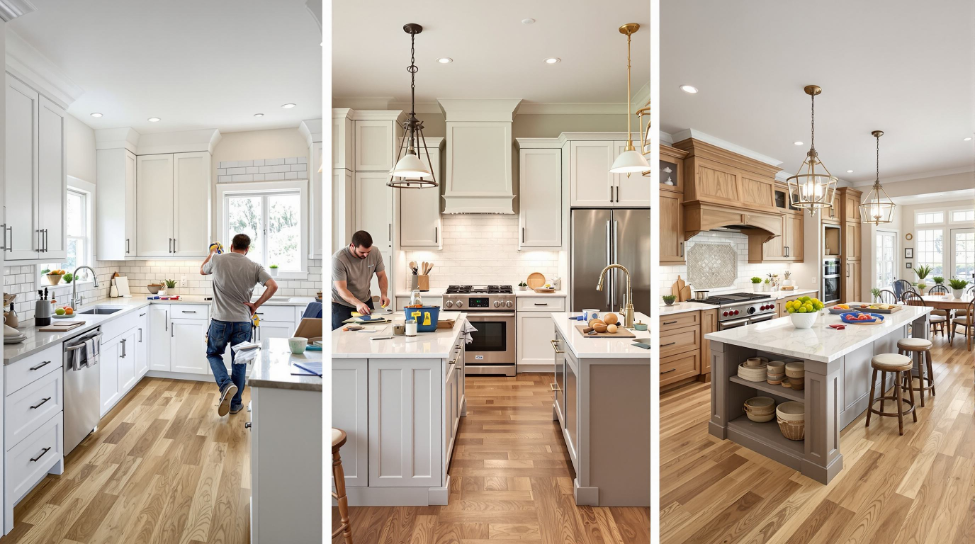
Kitchen Remodeling in Allentown, PA: Cost Guide
Quick Take: Most kitchen remodels in Allentown cost between $20,000 and $80,000+, depending on size, materials, and layout changes. Projects typically take 4 to 8 weeks once construction begins. Careful planning and clear design decisions up front help keep your budget and timeline under control.
If your kitchen still looks like it belongs in the 90s or earlier, you’re probably wondering what it would really cost to update it. Most homeowners in Allentown and across the Lehigh Valley know they need better storage, more counter space, or newer finishes, but the price range they see online can feel all over the place.
In this guide, you’ll get a clear look at real kitchen remodeling cost ranges, what affects your remodel budget, how labor and material pricing break down, and where surprise expenses usually come from. By the end, you’ll have practical renovation estimates and a realistic way to plan your project without guessing.
Average Kitchen Remodeling Cost in Allentown
For most homes in Allentown and the surrounding Lehigh Valley, kitchen remodeling costs fall into three general ranges. A smaller update with stock cabinetry, basic countertops, and minimal layout changes usually runs between $20,000 and $35,000. A mid-range renovation with semi-custom cabinetry, upgraded surfaces, and new appliances typically lands between $35,000 and $65,000.
Higher end projects can reach $65,000 to $80,000 or more. These usually include custom cabinetry, premium surfaces, structural changes, or moving plumbing and electrical lines. Older homes often fall into this category because they need code updates or hidden repairs once walls are opened.
If you’re planning a full kitchen remodeling project, the best way to estimate cost is to think in terms of scope, not just finishes. The size of the kitchen, the age of the home, and how much you want to change matter more than any single material choice.
The Biggest Factors That Affect Your Remodel Budget
Two kitchens the same size can have very different price tags because the details drive the numbers. Homeowners often focus on surface finishes, but the bigger cost drivers usually sit behind the scenes.
Here are the factors that have the biggest impact on your remodel budget:
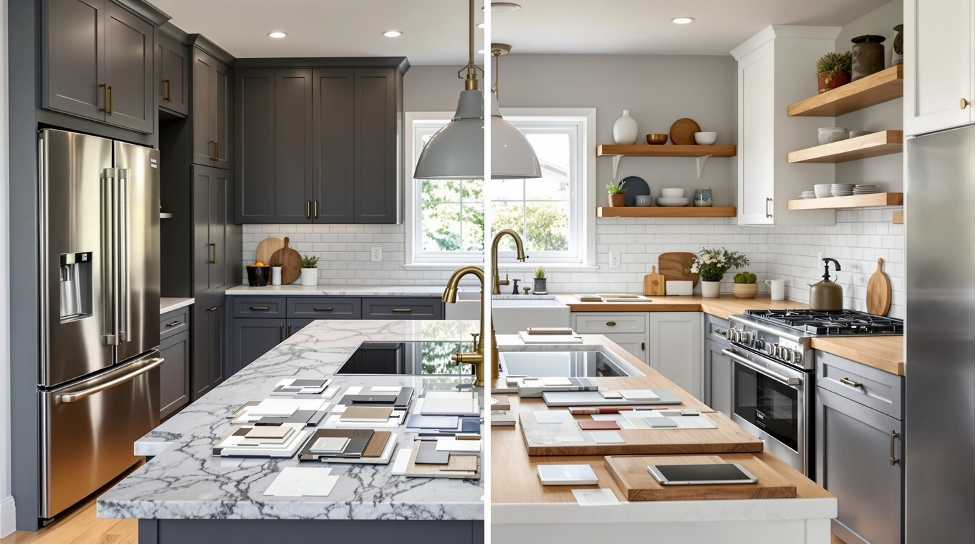
- Cabinet quality and construction: Stock, semi-custom, and custom options vary widely in price and durability.
- Countertop material: Laminate costs far less than quartz, granite, or other premium surfaces.
- Appliance upgrades: Professional ranges, built-in refrigerators, and specialty ventilation add up quickly.
- Electrical and lighting changes: Adding recessed lighting, under cabinet lighting, or new circuits increases labor costs.
- Home age and condition: Older Allentown homes often need plumbing updates, insulation fixes, or structural adjustments.
Most homeowners are surprised to learn that cabinetry alone can account for 30 to 40 percent of the total project. That’s why planning your kitchen cabinets early helps you control the overall budget.
Labor Costs and the Expenses Homeowners Don’t Expect
Labor typically makes up 30 to 50 percent of your total kitchen remodeling cost. This includes demolition, carpentry, plumbing, electrical work, drywall, flooring, and installation. In older Lehigh Valley homes, labor costs can climb if the contractor runs into outdated wiring, uneven framing, or water damage behind walls.
Permit fees, inspections, and disposal costs are smaller line items, but they still affect your final total. Living without a working kitchen during construction is another reality many people underestimate. Temporary meal costs and daily disruption are part of the real price of remodeling.
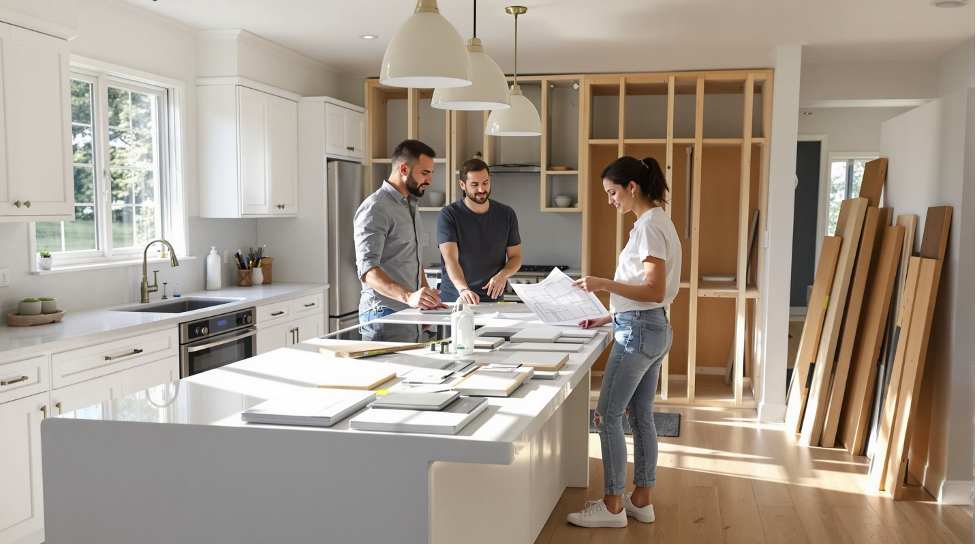
This is where planning matters. Our team reviews the space in detail before construction begins so we can catch potential issues early instead of adding change orders later. Clear renovation estimates upfront help you avoid the budget creep that many homeowners worry about.
Material Pricing Breakdown: Where the Money Goes
Material pricing varies widely, but most kitchen budgets follow a similar pattern. Understanding these ranges helps you decide where to invest and where to stay practical.
Typical material cost distribution:
- Cabinetry: 30 to 40 percent of total cost
- Countertops: 10 to 15 percent, depending on stone or surface choice
- Appliances: 10 to 20 percent
- Flooring: 5 to 10 percent
- Lighting and fixtures: 5 to 10 percent
- Hardware, trim, and finishing details: 5 percent or less
Upgrading to quartz or natural stone increases surface costs, but many homeowners in Allentown choose these options for durability and long-term value. Comparing options early with your kitchen countertops selection helps keep material pricing aligned with your overall plan.
How Layout Changes Impact Renovation Estimates
Changing the layout is one of the fastest ways to increase your kitchen remodeling cost. Keeping the existing footprint usually keeps labor manageable, while moving major components adds time and specialized trades.
Moving Plumbing or Gas Lines
Relocating a sink, dishwasher, or gas range requires opening floors or walls and rerouting lines. This adds both labor time and inspection requirements, especially in older homes.
Removing Walls or Expanding the Space
Opening the kitchen to a dining or living area can transform how the home feels, but structural changes often require engineering, permits, and additional framing work.
Electrical Upgrades
Many older Allentown kitchens don’t meet current code for outlet spacing, circuit capacity, or lighting. Bringing the space up to modern standards improves safety but adds to the overall renovation estimate.
Our team uses 3D design to show layout options before construction so you can see the cost impact of each change and make decisions with confidence.
How to Plan a Realistic Budget and Avoid Cost Overruns
The easiest way to control your kitchen remodeling cost is to make decisions early and leave room for the unexpected. Most professionals recommend setting aside a 10 to 15 percent contingency for hidden issues, especially in homes built 20 to 50 years ago.
Start by deciding what matters most to you. If storage and durability are priorities, invest in quality cabinetry and practical layouts. If appearance is the goal, you may choose simpler construction and upgrade finishes instead.
We’ve found that homeowners feel more comfortable when the process starts with a consultation rather than a sales pitch. Many clients also plan related updates at the same time, especially when considering future bath remodeling, which can improve overall home value and reduce future disruption.
Conclusion
Kitchen remodeling cost comes down to planning, priorities, and realistic expectations. Most homeowners in Allentown don’t overspend because they chose the wrong countertop. Costs usually climb when decisions change mid-project or hidden issues show up after construction starts. The more you define your layout, materials, and budget upfront, the smoother the process will be.
With clear renovation estimates, honest timelines, and guidance from an experienced local team, you can move forward knowing exactly what you’re investing in and why.
If you’re thinking about updating your kitchen, the best first step is a conversation. Our team at Direct Kitchen & Bath will walk through your space, discuss your goals, and provide realistic budget ranges based on your home and priorities. You’ll meet with Steven D. Strauss, AKBD, whose training in workflow, safety, and building codes helps ensure your design works as well as it looks.
With over 35 years of serving the Lehigh Valley and 10 consecutive Morning Call Reader’s Choice Awards, we focus on education, clear pricing, and a consultation-first approach. Visit our Whitehall showroom or call 610 427 2225 to start planning your kitchen with confidence, no pressure, and no surprises.
Frequently Asked Questions
Cabinetry is often the largest single expense in a kitchen remodel, especially if you move beyond stock options into semi-custom or custom construction. Labor can also make up a major share of the total. That is why early planning around layout and cabinet choices matters so much.
Older kitchens can hide issues such as outdated wiring, aging plumbing, uneven framing, or water damage behind walls. Those conditions increase labor and may require code-related updates before new materials can be installed. The older the home, the more important it is to leave room in the budget.
Yes, keeping the existing layout usually helps control costs because it avoids moving plumbing, gas lines, and major electrical components. Once sinks, ranges, or walls start shifting, labor and permit requirements often increase. Many homeowners save money by improving function without completely reworking the footprint.
Yes, especially in older homes. Many remodels uncover problems that were not visible at the start, such as water damage, wiring updates, or framing repairs. Setting aside a contingency fund helps you handle those surprises without throwing off the rest of your project.