
Kitchen Layout Mistakes That Hurt Function
Kitchen Remodeling in Allentown, PA: Layout Tips
Quick Take: Most Allentown kitchen remodels cost between $25,000 and $60,000 and take about 4 to 10 weeks, but layout changes made late in the project can add time and expense. Planning your workflow, clearances, and storage early helps you avoid costly mistakes and daily frustration. A functional design makes the biggest difference in how your kitchen feels long after the remodel is finished.
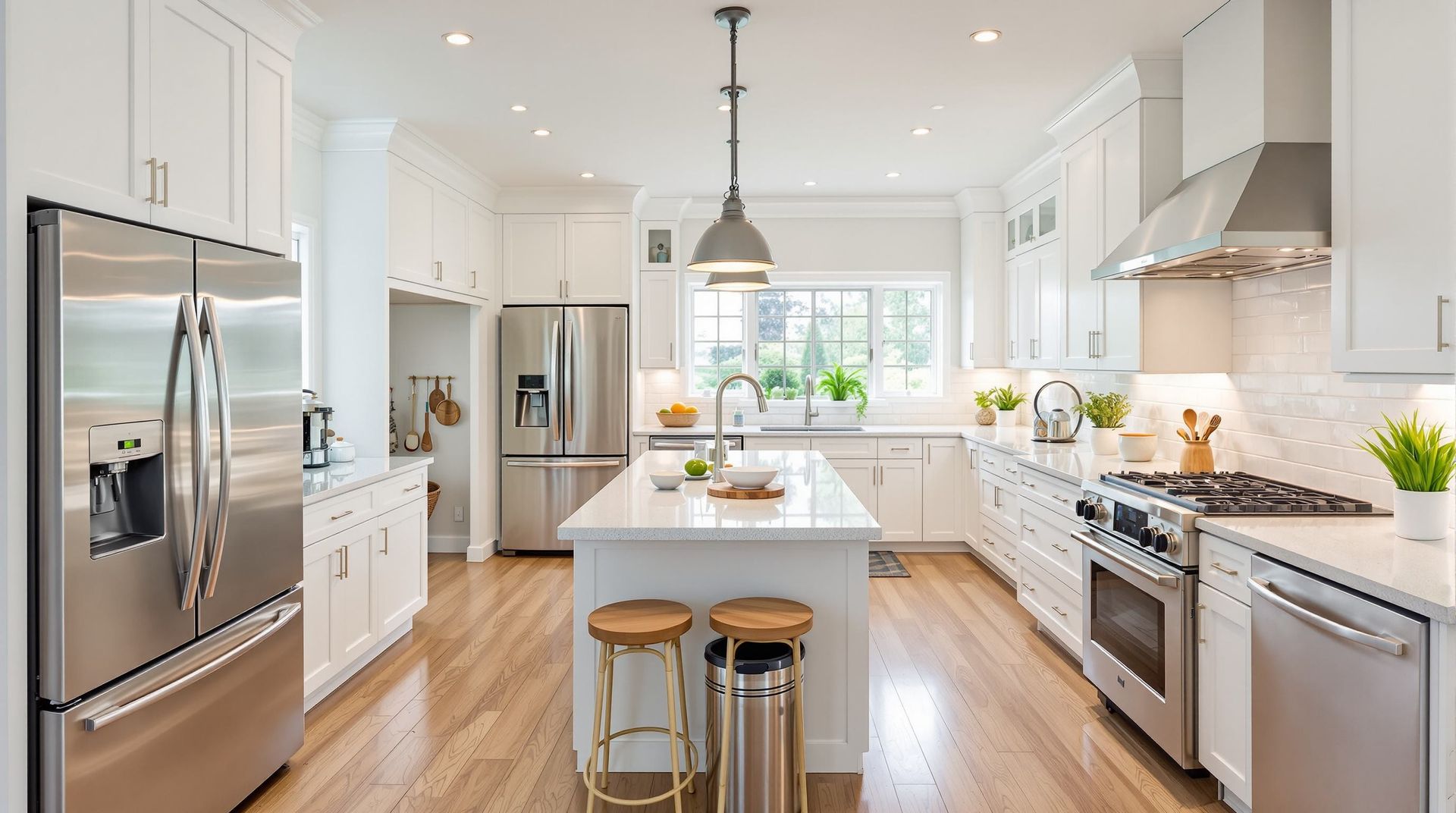
A kitchen can look beautiful on day one and still frustrate you every single day. We see this often in Allentown homes where the finishes are updated, but the layout still causes traffic jams, tight workspaces, and storage that never seems to be in the right place. When the refrigerator door hits the island, or two people cannot pass without turning sideways, the problem is not style.
In this guide, you will learn the most common kitchen layout mistakes and how to avoid them. We will walk through the kitchen work triangle, traffic flow, and cabinet placement. The goal is simple. Help you make smart layout decisions before construction so your kitchen works as well as it looks.
When the Work Triangle Doesn’t Actually Work
The kitchen work triangle connects your sink, refrigerator, and cooking surface. Ideally, each leg should measure between 4 and 9 feet, and the total distance should fall between 13 and 26 feet. Too tight and you feel cramped. Too spread out, and you are walking laps just to make dinner.
Many homeowners unintentionally break this balance. A large island blocks the path. The refrigerator ends up outside the main work area. Or the range is pushed into a corner where two people cannot use it comfortably. These issues do not show up on Pinterest boards, but they show up every night when you cook.
Our team often catches triangle problems during the design phase, especially in older Lehigh Valley homes where walls were added or removed over time. Small adjustments on paper can save a lot of frustration later.
Fixing the triangle is just the start, because most functional problems come from a handful of common layout mistakes.
Poor Traffic Flow That Turns the Kitchen Into a Bottleneck
Even a well-designed work triangle fails if people constantly cross through your workspace. In many Allentown homes, the kitchen doubles as a pass-through between the garage, dining room, and living area. Without proper planning, every meal prep turns into crowd control.
Here are the most common traffic flow mistakes we see:
- Walkways that are too narrow. Plan for at least 42 inches for one cook and 48 inches for two cooks.
- Islands are placed in the main traffic path. If people cut through the cooking zone to reach another room, the layout needs adjustment.
- Appliances opening into walkways. A refrigerator or dishwasher door should not block the main path.
- No separation between work and seating areas. Guests should be able to sit or stand without interfering with cooking.
Good workflow design creates clear zones so movement feels natural instead of crowded.

Nature's Symphony
Cabinet Placement That Looks Good but Fails in Daily Use
Cabinet layout is about more than filling wall space. The placement should match how you actually use the kitchen. When storage is disconnected from the work areas, you spend more time walking and searching than cooking.
For example, dishes should be near the dishwasher, not across the room. Pots and pans belong close to the range. Everyday items should be in easy-to-reach locations instead of upper cabinets that require a step stool.
We also see common problems like corner cabinets that are difficult to access, tall pantry units that block light, or deep base cabinets where items disappear in the back. Choosing the right kitchen cabinets and placing them by task creates a smoother workflow.
In older Allentown homes, improving cabinet placement alone can make the space feel larger without moving walls.
Appliances That Compete Instead of Cooperate
Appliance placement plays a major role in workflow design. When doors collide, or work zones overlap, even a large kitchen can feel awkward.
Refrigerator Conflicts
The refrigerator should be easy to access from both the cooking area and the kitchen entrance. If the door swings into an island or blocks a walkway, it interrupts the entire space.
Dishwasher and Sink Crowding
The dishwasher should sit next to the sink, but it also needs enough clearance to open fully without blocking the main path. This is especially important in busy households where multiple people use the kitchen at once.
Microwave and Wall Oven Placement
During layout planning, we look at how each appliance interacts with the others. Fixing conflicts early is much easier than relocating electrical or plumbing later.

Nature's Symphony
Oversized or Undersized Islands
The kitchen island is one of the most requested features in Lehigh Valley remodels, but size mistakes are common. Bigger is not always better.
An island needs at least 42 to 48 inches of clearance on all working sides. Anything less creates tight walkways and door conflicts. On the other hand, an island that is too small limits prep space and seating.
Seating also requires careful planning. Each stool needs about 24 inches of width, plus 12 to 15 inches of overhang for comfortable legroom. Without these measurements, the island looks good but feels cramped.
When homeowners add sinks, cooktops, or outlets, the surface material becomes even more important. Durable, properly sized kitchen countertops help the island function as a true work zone instead of just a focal point.
Designing for Looks Instead of How You Actually Live
One of the biggest kitchen layout mistakes is designing for photos instead of daily routines. Open shelving, oversized islands, or minimal storage may look great online, but create frustration over time.
Start by thinking about how your household really uses the space. Do you cook every night or mostly reheat meals? Do kids do homework at the counter? Do you entertain often? Your workflow design should reflect real habits, not trends.
This is where professional planning makes a difference. During a kitchen remodeling project, we often discuss lifestyle details that affect layout decisions, such as grocery storage, small appliance use, and traffic patterns.
Many Allentown homeowners also choose to coordinate layout improvements with other spaces. If you are updating multiple areas, planning both kitchen and bath remodeling together can improve overall home function and reduce disruption.
With over 35 years of service in the Lehigh Valley, we have seen how thoughtful layout planning protects your investment and prevents costly changes after construction begins.
Frequently Asked Questions
The best way is to review a detailed floor plan or 3D design that shows clearances, appliance spacing, and traffic flow. Seeing how the layout functions on paper helps catch issues early, before materials are ordered or walls are opened.
Most kitchens need at least 42 inches of clearance for one cook and 48 inches for two cooks. Appliance doors should open without blocking walkways, and seating areas should be positioned so they do not interfere with prep or cooking zones.
Yes, many layout problems can be improved by adjusting appliance placement, cabinet configuration, and storage zones within the existing footprint. Small changes in positioning often make a big difference in how the kitchen functions without the cost of structural work.
The key is separating work zones and allowing enough clearance for movement. Designing distinct areas for cooking, prep, and cleanup helps prevent overlap, while proper spacing ensures two people can use the kitchen comfortably at the same time.